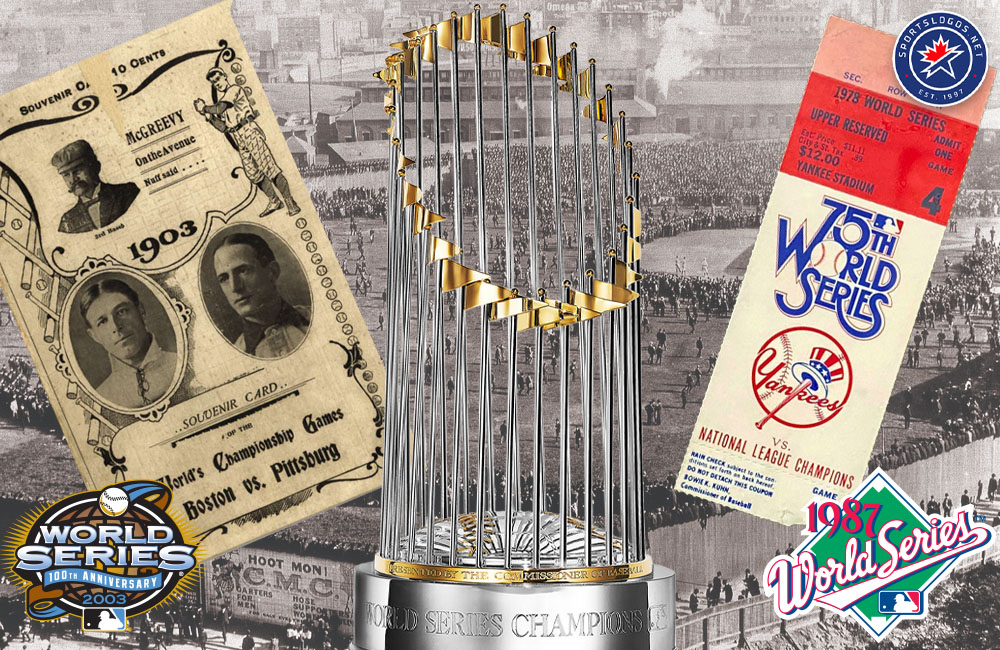
The World Series is Major League Baseball’s annual championship, a postseason matchup that determines the champion of the American League and National League. Though it now feels like an immovable part of the sports calendar, the World Series as we know it did not formally begin until 1903, following decades of informal and short-lived championship experiments between rival leagues. Early professional baseball champions often arranged ad-hoc postseason series, from the 1884 showdown between the National League’s Providence Grays and the American Association’s New York Metropolitans to the Temple Cup of the 1890s. The modern World Series emerged when the upstart American League and the established National League finally agreed to meet after the 1903 season, with the Boston Americans defeating the Pittsburgh Pirates in a best-of-nine series. Aside from cancellations in 1904 and 1994, and a brief return to a best-of-nine format from 1919 to 1921, the Fall Classic has remained a best-of-seven championship ever since.
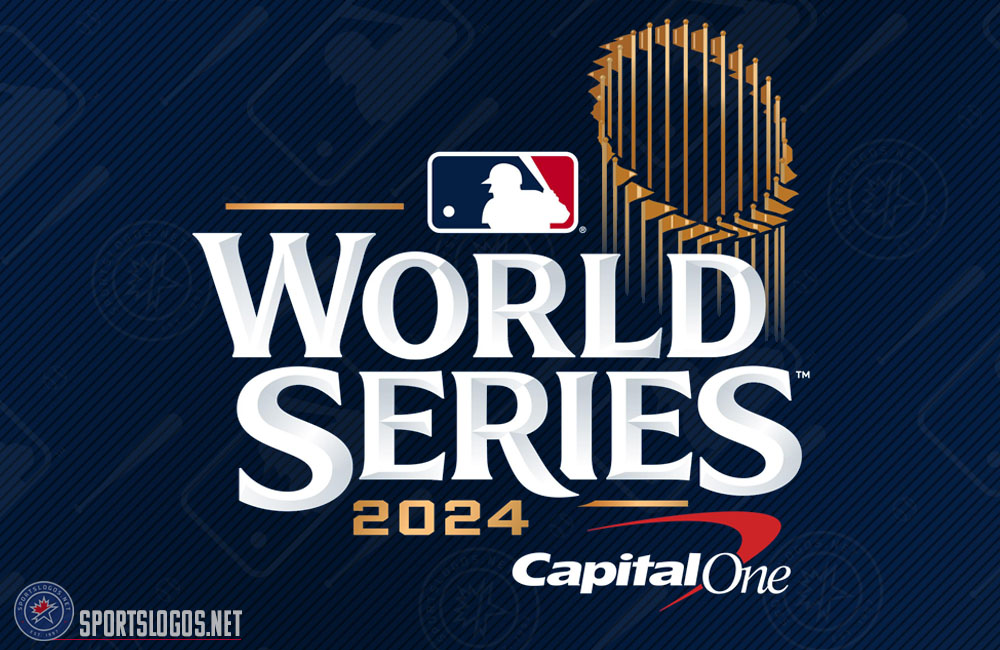
The visual identity of the World Series developed much later, beginning with the introduction of an official championship trophy in 1967. Major League Baseball’s original World Series trophy featured a ring of gold flags representing every club in the league, a design later reworked by Tiffany & Co. in 2000 into the silver Commissioner’s Trophy still presented today. Official World Series logos arrived even later, debuting in 1978 before evolving through a series of templates in the 1980s and 1990s and eventually giving way to annual designs beginning in 2000. Since then, the World Series logo has become a constant presence on uniforms, tickets, on-field graphics, and the Commissioner’s Trophy presentation itself.